Content material warning: This interview contains express references to violence and assault.
Zeelie Brown is an unapologetic artist, absolutely expressing their desires, beliefs, and goals by means of their work. They embrace vulnerability in methods others could draw back from. As a jazz cellist and multimedia artist, Brown honors the heat of their Southern heritage whereas confronting its advanced and infrequently darkish historical past. With a powerful dedication to group and anti-capitalism, Brown redefines the which means of artwork as a supply of nourishment for the soul, advocating for psychological well being and financial liberation for Black folks. In addition they provide meals to live performance attendees, guaranteeing that everybody leaves with one thing significant.
The compassion that characterizes Brown’s humanity shines by means of of their music. Their debut album, the apocalypse isn’t the tip however the unveiling (launched December 5, 2025, on New Amsterdam Data), is a Blues-infused creation that highlights the world’s struggles by means of deeply genuine and exquisite soundscapes. It looks like a dwell efficiency, full with anecdotes and monologues that information listeners by means of the complexities of magnificence and heartache. From recounting the painful legacy of Black farmers to uplifting affirmations like “let go, let God,” Brown escorts listeners on a transformative journey of embracing each hope and hardship.
After the album’s launch, I had the possibility to talk with Zeelie and delve deeper into their inventive journey and inspirations.
In your bio, you determine as a jazz cellist and multimedia artist. Are you able to share your journey to get up to now, particularly in a discipline that usually values specialization?
Jazz embodies the great thing about imperfection and the areas between notes. I attempt to mirror that in my music. My roots lie in a wealthy cultural tapestry of Black, Indigenous, Spanish, Anglo-American, and German influences from South Texas. In my group, classical music thrives alongside the mariachi melodies that fill the streets with tales of affection and longing. I additionally draw inspiration from the custom of lined-out hymns handed down from enslaved Africans in rural Alabama, the place congregational singing intertwined with the blues created a novel musical heritage. I concern this profound custom is vulnerable to being overshadowed by the digital age.
My time at Oberlin was important in shaping my inventive voice, due to the unwavering assist of the Black arts college. Nevertheless, the expertise was traumatic. Black opera singers confronted expulsion for singing in church, because it was believed that this type of expression would break their voices. How can we respect younger artists whereas imposing such harsh restrictions? Many people virtually broke underneath that stress.
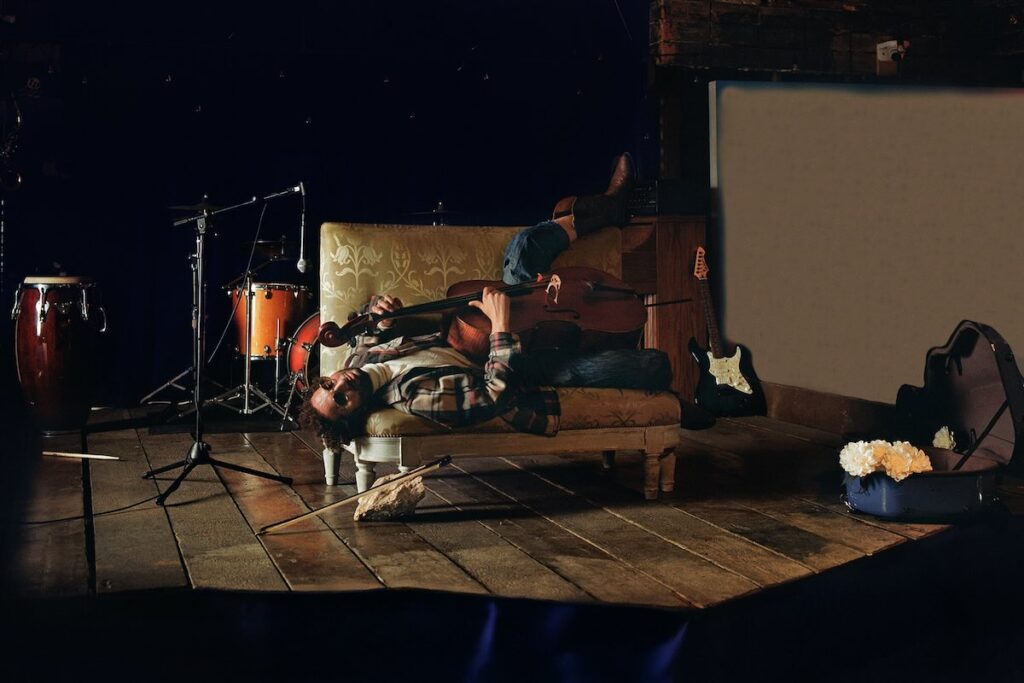
My cello, which has an irreparably damaged neck and sits at a clumsy angle, symbolizes my journey as effectively. It nonetheless holds reminiscences of triumph, like profitable a concerto competitors with the Youth Orchestras of San Antonio and studying jazz with Ralph Jones III. Sadly, my mother and father, who aspired for the American Dream, fell sufferer to an unscrupulous luthier.
Very similar to my damaged cello, my artistry emerges from the necessity to survive and to piece myself again collectively within the wake of trials. My work serves as a tapestry of reminiscences and reassemblies that act as guides for individuals who could really feel misplaced.
All through my journey, music has been my lifeline, bringing heat throughout harsh winters and luxury in my darkest instances. It has been my anchor.
You’ve described your new album as a type of “prayer.” What makes this method particularly related in the present day?
The world feels chaotic proper now. The Rio Grande has shrunk to a trickle, company consolidation in Hollywood grows rampant, and inflammatory rhetoric surfaces in political discourse. We see actually alarming actions, just like the Secretary for Homeland Safety concentrating on people based mostly solely on their id, resulting in unspeakable struggling.
Pandemic-induced hunger is handled as a joke, harking back to the horrors of the Irish Famine. Systemic injustices threaten to erase many years of civil rights progress, and academic alternatives are underneath siege. Immigrant kids are misplaced inside a damaged system. Loss and struggling abound globally, together with crises in Gaza and Sudan.
When people consider in nothing higher than themselves, true evil prospers. This makes me mirror on how Black quilts function protecting symbols, stitching collectively the methods we resist societal fragmentation. In my Alabama upbringing, prayer was interwoven with labor, a necessity for dealing with violence and adversity.
Prayers are intentions, and our world is a collective manifestation of these intentions.
“interlude two” quotes the bariolage part from Bach’s first cello suite. How does conventional classical music inform your work?
European classical music is only one amongst many refined traditions. I discover nice solace in traditions from different cultures, too. Bach’s stark naturalism from Leipzig resonates deeply, whereas Shostakovich’s sharp wit affords consolation in instances of misery. Coltrane’s A Love Supreme takes me to untouched realms of spirituality, whereas J-Dilla’s “Sunbeams” shines as a logo of hope amid decay. The intricate rhythmic traditions from Haiti are difficult to seize in writing, but they communicate volumes to me.
I respect the European orchestral custom for its construction and precision, however I crave humility and a willingness to be taught from various musical expressions.
Your performances constantly embody recent meals for patrons. How has this observe been acquired, and have you ever noticed others emulating it?
To my information, not many have adopted on this route. Impressed by the legendary Black arts collective JAM Gallery, I’ve witnessed how small acts of kindness—like sharing gumbo or poundcake—can mild up faces, particularly in areas the place communities have traditionally felt unwelcome. Having one thing substantial obtainable helps folks loosen up and actually get pleasure from themselves.
Entry to nutritious meals is a elementary human proper. In New York, class and racial disparities hinder entry to wholesome meals choices, regardless of the area’s proximity to considerable farmland. The agricultural system is damaged, perpetuating starvation amongst kids and households.
As somebody who has skilled homelessness and financial hardship, I empathize deeply with these in related conditions. Good meals shouldn’t be a privilege; it have to be accessible. At my exhibits, I wish to reciprocate the love proven to me by providing meals to these in attendance.
In what methods do you consider classical music falls quick in constructing group, and the way can we enhance?
We have to have interaction in tough conversations surrounding class, eugenics, cultural erasure, and financial stability for artists in classical music. In its 142-year historical past, the Metropolitan Opera has showcased only one Black composer, and it is a disheartening reflection of a systemic challenge.
By prioritizing sure musical traditions, we inadvertently dictate who will get heard. The establishments of Western classical music are sometimes rooted within the violence and oppression of Indigenous peoples and Black communities. These cultural institutions appear designed to compete with Europe, however at what value? The facility of American communities lies of their means to unite and rise above adversity.
We require sturdy organizing that connects artists with important assets—meals, housing, healthcare, {and professional} growth. Transitioning from a scarcity-based mannequin to 1 centered on group progress will acknowledge the invaluable contributions musicians make to society.
We want music applications in America’s poorest faculties—city and rural—to be sturdy, together with African, Center Jap, and Indigenous pedagogies. We should discover modern applied sciences to bridge academic gaps, scale back boundaries to studying, and domesticate a supportive community for musicians.
We also needs to rethink what success seems like for artists. There’s nothing shameful about needing monetary assist to outlive whereas enriching folks’s lives by means of music. We should foster collaboration quite than competitors, guaranteeing that artwork stays a instrument for upliftment and group cohesion.
I CARE IF YOU LISTEN is an editorially-independent program of the American Composers Discussion board, made attainable by beneficiant assist from donors and establishments. You may assist assist ICIYL by making a tax-deductible donation to ACF. For extra data on ACF, go to composersforum.org.