In a world the place world music is just some clicks away, many are impressed to discover and create cross-cultural sounds. Regardless of the abundance of tutorials, scores, and recordings out there on-line, there are parts of musical traditions that always stay elusive, past the attain of formal instructing.
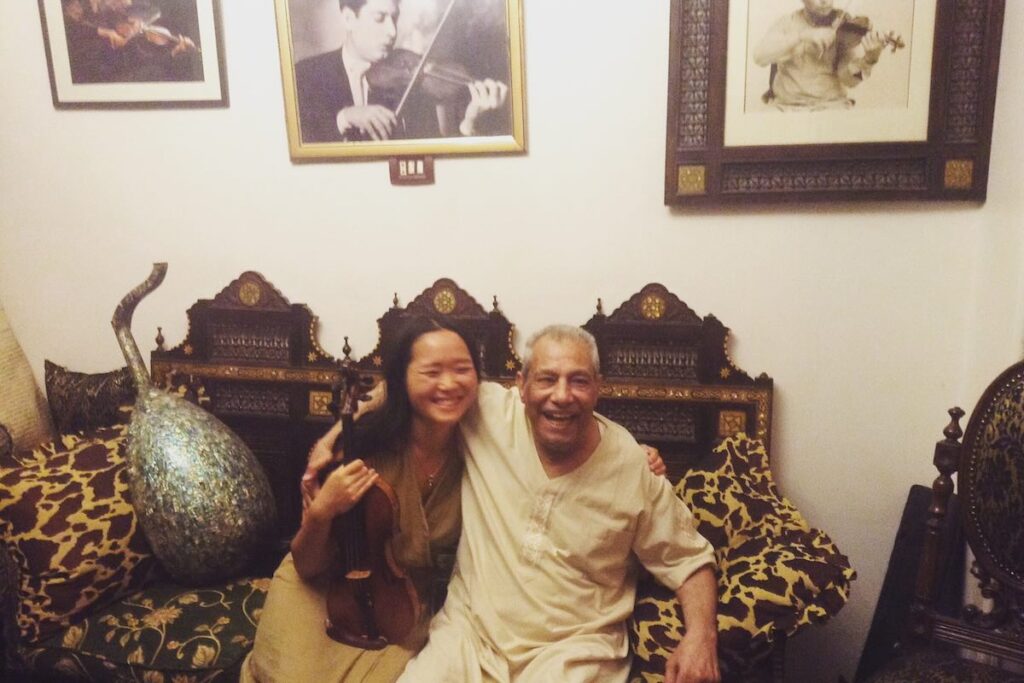
As a Japanese violinist and composer residing in New York Metropolis, I concentrate on Arabic music, notably from the area stretching between Cairo and Aleppo. I cherish the honour of being welcomed into the Arabic music neighborhood in Cairo, together with alternatives on the Cairo Opera Home. My research with the late grasp Abdo Dagher have profoundly formed my musical journey, extending my schooling past mere sound to a deeper engagement with the tradition that nurtures this music. Whereas I’ve devoted myself to this wealthy custom, I stay a lifelong learner, cognizant of my standing as a non-Arab.
In recent times, I’ve had the privilege to show Arabic music, which has illuminated some essential insights for me. There are particular abilities I can impart: the scales, ornamentation, and construction of a maqam. But, there are subtleties I can not adequately convey via classes. I discover that:
The feeling of air in Cairo
The rhythm of dialog
The best way individuals transfer, pause, and pay attention
These aren’t technical abilities; they’re experiences that infuse the music with a depth that no sheet music or on-line class can replicate.
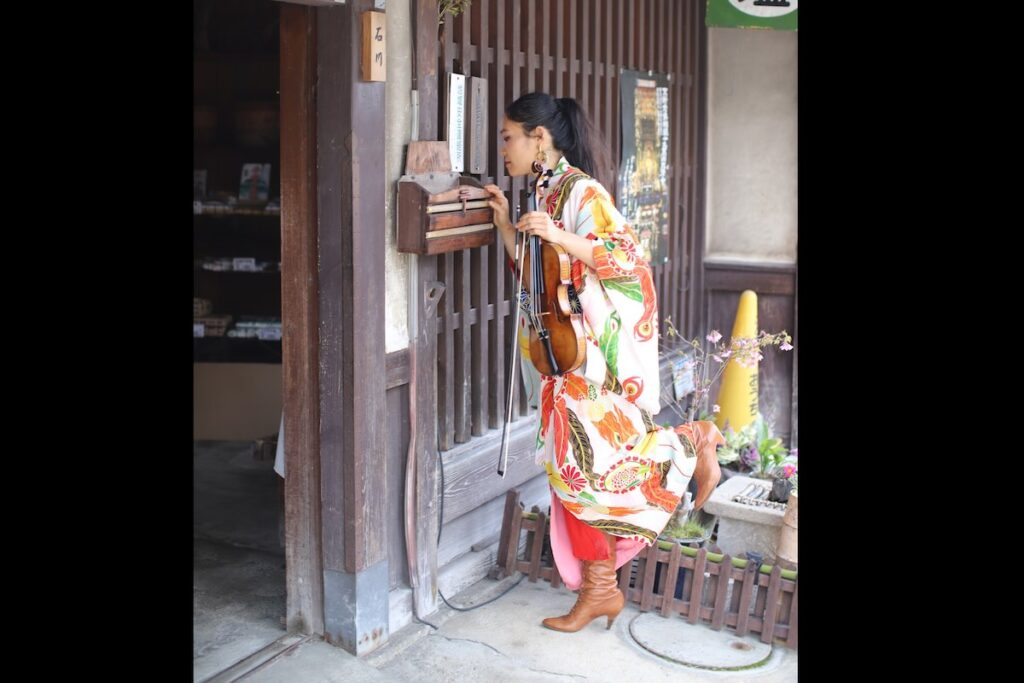
Japan, my homeland, is a spot the place age-old traditions aren’t merely preserved as artifacts however are woven into the material of on a regular basis life. With an unbroken imperial lineage for over 2,686 years, Japan traditionally sought to restrict outdoors affect, notably throughout the Sakoku interval (1639–1853), when overseas interplay was largely restricted for over two centuries.
Guests usually describe Japan as an unparalleled expertise. After years overseas, I resonate with this sentiment too. Japan feels distinctive—not in a way of exoticism, however in how deeply tradition is ingrained in day by day existence. Traditions, customs, and values manifest naturally via embodied practices moderately than aware efficiency. Every gesture embodies historic significance, although many could not actively acknowledge its origins.
Once I envision somebody enterprise a journey to be taught a Japanese custom—be it the shakuhachi flute, tea ceremony, or the artwork of miygadaiku carpentry—I can instantly sense the depth of that have. Mastery transcends easy observe; it includes dwelling the custom: the language, posture, sitting on tatami, standing, strolling—every of those nuances varies drastically throughout cultures, as does the connection to seasonal meals, setting, and time.
Such sensory experiences—motion, style, texture, and rhythm—form tradition holistically. Music isn’t any exception.
Partaking with music devoid of cultural involvement affords solely a superficial understanding. The essence of music attracts its richness from the invisible layers of lived expertise that underlie the sound. This deep cultural connection doesn’t unveil itself swiftly; it calls for time, humility, and a readiness to be remodeled.
Geography
Geography profoundly shapes tradition—it influences how individuals work together, collect, assemble, and eat. Over time, these environmental elements seep into day by day life, molding inventive expression from the core outward.
Studying from immigrant musicians holds important worth, usually appearing because the preliminary bridge to a brand new musical custom. Many musical kinds are cherished and sustained by immigrant communities, who generously contribute to the continuity of those practices removed from their origins. Nevertheless, there are intrinsic limits to what could be conveyed outdoors of a convention’s birthplace.
Throughout my time in Cairo, I struggled to adapt. I discovered myself lacking Japanese delicacies profoundly. At one level, I introduced a high-quality miso from a centuries-old Japanese firm, treating it as an emotional lifeline. I made miso soup with native greens, solely to search out it completely unsatisfactory. Even the best substances couldn’t reveal their full potential with out the fitting context.
This expertise highlighted a significant lesson: with out an acceptable surrounding, even the perfect supplies fall flat. The identical precept applies to music.
Language
Language serves an identical function. Mastering a language could indirectly improve technical proficiency, however it essentially alters one’s musical expression. A deep understanding of the language reshapes phrasing, timing, and emotional contours.
Throughout a rehearsal on the Cairo Opera Home, I witnessed this firsthand. A fellow violinist shared a video of considered one of his college students, a newbie with solely two years of expertise. My expectations have been modest, but the coed astonished me with a brief taqasim efficiency. No matter his technical limitations, the emotional depth of his sound was breathtaking.
This second underscored the simple connection between language and music—what was revealed was not mere technical talent however an internalized understanding that transcends sound alone.

Context
Eradicating cultural traditions from their native contexts diminishes their significance. Classical music resonates deeply in a church setting, the place the structure and acoustics improve its emotional influence. Conversely, acting on tatami mats inside a conventional Japanese home alters the auditory expertise. The acoustics take up sound in another way, permitting the area to instruct the musician on listening, tonal shaping, and creating silence.
Sound is inexorably linked to position. Music isn’t solely outlined by what’s performed, but additionally by the place and the way it exists. I’ve skilled nothing extra profound than witnessing the convergence of all parts—like Arabic music echoing within the historical alcoves of Outdated Cairo or a tea ceremony in a time-honored Kyoto teahouse, the place seasonal parts harmonize with the artwork type. In these moments, the artwork shines in its full essence.
Assimilation
As I tailored to life in Cairo, my artistry advanced alongside my on a regular basis experiences. Navigating Cairo’s bustling streets calls for acute bodily consciousness, as pedestrians usually yield to automobiles. Many foreigners discover crossing daunting. I recall gathering the braveness to step onto the road, observing how Egyptians transfer with a gentle, calibrated rhythm—neither hurried nor hesitant. This flexibility in motion displays a singular cultural timing, which might solely be absorbed via observe.
A pal remarked on my improved street-crossing abilities, saying, “You’ve began to maneuver like an Egyptian.” This remark lingered with me lengthy after my bandleader praised my taking part in’s noticeable progress.
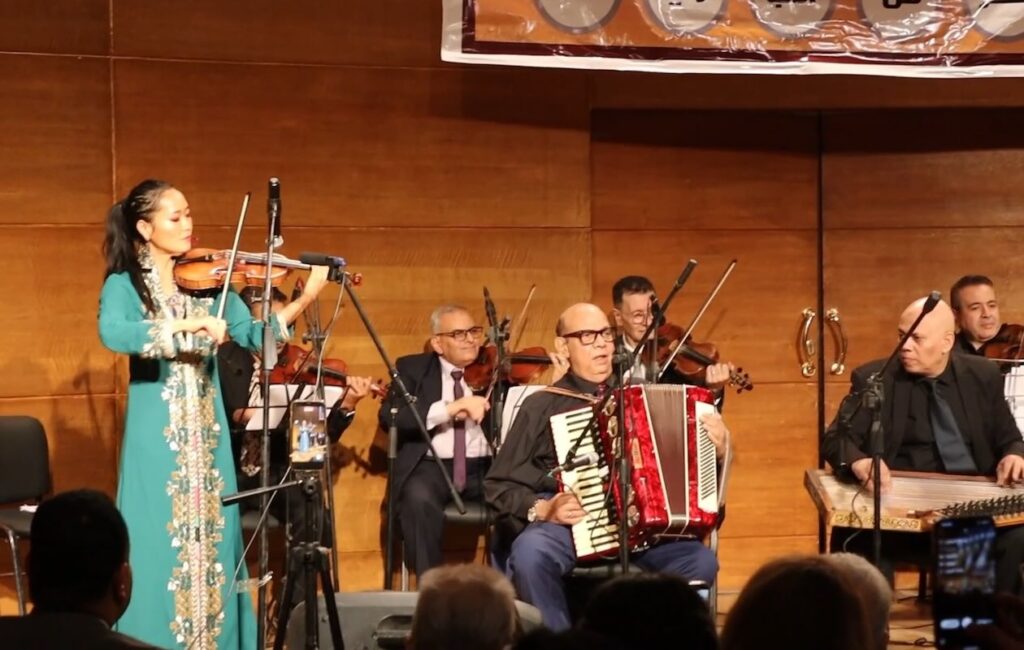
On the identical time, my spoken Arabic grew to become extra fluid, and conversations felt extra pure. My culinary experiences advanced as Egyptian spices grew to become acquainted, regularly easing the eager for residence. These adjustments have been interconnected, reflecting a holistic assimilation—musical, linguistic, bodily, and sensory.
We inhabit an period the place broad entry to world cultures is commonly confused with real understanding. Whereas method and targeted examine are important, so is the endurance to embrace what could really feel like wasted time. It’s essential to do not forget that understanding musical traditions from completely different cultures requires experiencing their genuine expressions, ideally of their unique environments. With out the nuances of place, time, and embodied observe, our studying stays superficial.
Arabic music is likely to be accessible on YouTube, and you may actually examine maqam on-line. But, in case you have by no means stood beneath the echo of the decision to prayer, felt the swelter of Cairo, or shared a meal in a house steeped in that musical tradition, you might be solely encountering a fraction of the entire. This isn’t a failure—merely a limitation. What is actually essential isn’t complicated the half with the whole thing. Some experiences should be lived, and this too is an important side of studying.
I CARE IF YOU LISTEN is an editorially-independent program of the American Composers Discussion board and is made potential by beneficiant donor and institutional assist. You’ll be able to assist the work of ICIYL with a tax-deductible present to ACF. For extra on ACF, go to composersforum.org.