The Evolution of a Band: From Wicked to Visions of Change
Should you enterprise into an online seek for the Wicked, be ready for a problem. Within the mid-Nineteen Eighties, this hardcore punk outfit was shaking up Leamington Spa, Warwickshire, England. Not like at present, when including “punk” to your search nonetheless factors you elsewhere, searches again then had been easy. What an AI would possibly produce in search outcomes is a thriller greatest left so that you can uncover—if you happen to dare.
The Wicked launched two albums throughout their temporary run: Come on Down in 1985 and Stupidity Maketh the Man in 1986, each beneath Youngsters of the Revolution Data. Regardless of being recorded on a modest funds, these albums showcase notable instrumental talent and ingenious aptitude for his or her style.
On Come on Down, the band energetically embraces an English punk model whereas skillfully incorporating surf rock, psychobilly interludes, and even a piano second. The album options not simply standard monitor divisions but additionally segments playfully titled “Mummy’s on Valium Facet” and “Daddy’s on Blues Facet.” Whereas tune titles like “Fucked Up” and “KKK” counsel a tough hardcore edge, tracks akin to “Are We Getting By?” and “Resident President” reveal deeper, considerate lyrics. The Wicked might have probably created a memorable sequence, risking being boxed in by their very own previous achievements, very similar to different bands going through limitations of vary.
Nevertheless, Stupidity Maketh the Man displays creative evolution. The title itself might have attracted extra consideration if the band had recorded beneath a distinguished American label like SST. Creativity shines all through, with tracks like “Let’s Develop Some Flowers (Collectively),” “Agent Orange,” “Purple September,” and a garage-rock tackle the Isley Brothers’ “Shout” showcasing an consciousness of ’60s influences—one thing you wouldn’t usually discover in easy English punk.
This time, British punk from Come on Down will get blended with slower tempos, layered guitar results, and nods to The Beatles and The Who. The Wicked appears influenced not simply by British artists, but additionally by American hardcore, notably SST’s Minutemen, Hüsker Dü, and Black Flag. Whereas they don’t mirror these bands instantly, they proudly exhibit distinctive types that advantage the time period “postmodern.”
A Title Change: From Wicked to Visions of Change
Then the Wicked made a stunning flip: adopting a extra upbeat method, broadening their influences to incorporate much more pronounced ’60s sounds, and rebranding themselves as Visions of Change. This transformation is akin to one thing you’d count on from a parody like This Is Spinal Faucet. Prince’s personal rebranding efforts are one other well-known comparability.
Whereas Prince might need taken a number of years to endure his transformation, Leamington’s expertise outpaced him—at the very least briefly. They could have been the Artists Previously Often called the Wicked. In 1988, this identify change coincided with the discharge of their self-titled album by way of London’s Firefly Data, which was probably only a entrance for the band itself. The brand new lineup included vocalist Ian Murphy, bassist Spencer Hunt, drummer Gigs (Paul McGivern), and guitarist Lee Fester, who switched from guitar to the Hammond organ.
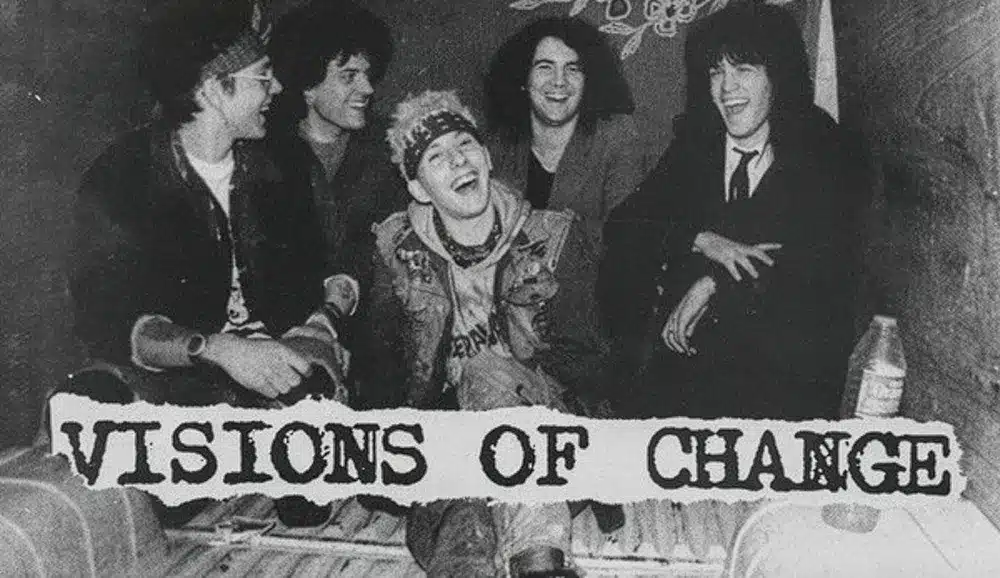
The visible illustration as Visions of Change marked one other shift. Gone had been the Wicked’s punk-centric visuals; the brand new album cowl bore a vibrant, colourful emblem harking back to later Beatles or Stones aesthetics. A photograph on the internal sleeve featured band members with lengthy hair harking back to the late Sixties, with one member even sporting a Black Flag shirt.
As for the music? It’s a curious mix—not fairly a misplaced gem however greater than only a historic anecdote. Every hear reveals nuances which will have been ignored initially. Should you’re a hardcore fan akin to Minor Risk, this may not resonate with you. Nevertheless, those that take pleasure in melodic punk harking back to bands like Dag Nasty would possibly discover it extra interesting. Liking bands like Hüsker Dü or Bare Raygun might additionally improve your appreciation, though musical preferences don’t assure a mutual appreciation.
For the file, Visions of Change advantages from a lyric sheet; whereas the lyrics could not shimmer with wit, they convey sincerity of their message—even when they usually dwell on themes of wrestle and perseverance. The combination on the unique urgent can bury vocals in echo, making them troublesome to discern. What initially looks as if shouting turns into an efficient interaction the place Ian and Lee commerce traces. A clearer combine might have really showcased the band’s expertise.
The opener “Roundabouts and Swings” introduces themes of time and reminiscence. All through the album, the vocalist strives for authenticity and connection, craving to specific himself with out alienating others. In “Reciprocate,” he ponderously notes, “It’s only a query of what’s proper,” whereas in “Be the Youngster,” he asserts, “I’ve gotta learn to loosen up, unwind.”
Musically, tracks continuously start in a hardcore thrash model earlier than transitioning by numerous tempos. “Underneath One Fist” is energetic and builds momentum, whereas “Reciprocate” options an sudden hard-rock section. “Burn Inside” channels ’60s rock vibes, harking back to the MC5 with added organ aptitude, and “Shades of Inexperienced” combines high-energy sections with melodic interludes.
In one other timeline, “Simply Goals” might have emerged as a shiny hit single. Whereas it could not rival the perfect of Wicked, it outshines some lesser choices from Pete Townshend or Paul Weller. The file additionally holds surprises: “Muso” provides a quick acoustic interlude, “August a Go-Go” options intricate instrumental interaction, and so they cowl The Beatles’ “Day Tripper.”
Curiously, right here we’ve an English punk band—descended from the Conflict—deciphering a Lennon-McCartney basic. Their rendition carries the fervour of Hendrix’s anarchic take, making it really feel recent and very important. Should you stumbled upon this monitor taking part in in a store, you would possibly end up intrigued sufficient to recollect the band’s identify.
Closing Adjustments and Legacy
By the point the lyric sheet for Visions of Change was compiled, the lineup had shifted as soon as extra, with Johnny Barry taking on on bass and Kev (Kevin Webb) stepping in as a second guitarist. A 12 months later, additional modifications led to the discharge of their second and closing album, My Minds Eye, in 1989 beneath the now-defunct Massive Kiss Data, that includes drummer Ivor Joseph.
The album begins with “Countless,” setting a garage-rock vibe, and Ian’s vocals are clearer than earlier than, although he nonetheless usually feels like he’s shouting. The band’s indie-rock and power-pop tracks might have discovered a house on school radio in 1989, however they aren’t notably memorable.
Whereas some musicians breakthrough into wider recognition, others stay beneath the floor. My Minds Eye could not unveil hidden treasures, however it distinctly illustrates the band’s journey. Anybody unaware of the Wicked’s hardcore roots would probably by no means guess their origin.
The Legacy They Left Behind
By steady evolution, because the Zen proverb reminds us, these DIY rockers pursued their visions of change, difficult their boundaries. A particular shoutout to Boss Tuneage Data for the 2012 two-CD compilation that introduced collectively the entire works of the Wicked and Visions of Change, alongside demos and John Peel recordings. Discovering this assortment could also be fairly the duty, and the absence of My Minds Eye—whether or not intentional or not—makes aesthetic sense, because it distinctly displays a distinct musical path.