By Mission Poetic Justice, artist and activist Ryan Alexander merges his deep dedication to social justice schooling along with his background in music composition. The initiative goals to domesticate a musical neighborhood throughout the DC Jail, inviting incarcerated younger adults to have interaction in poetry writing, music composition, and showcase their creativity by means of two live shows: one for the members contained in the jail and one other for his or her households outdoors.
Now in its second 12 months, Mission Poetic Justice is supported by devoted volunteer educators from Johns Hopkins College and the Peabody Institute, together with neighborhood donations. Members discover solace within the act of creation; as Tomar, a participant, expressed, “Writing helped me launch a number of inside anger and anxiousness.” Furthermore, this system has facilitated tangible enhancements for some, like Shane, who acquired a sentence discount as a result of his engagement in this system.
Regardless of the modest nature of the initiative, Alexander acknowledges its profound affect. His goal is to not enact swift change, however to plant seeds of musical hope in members’ lives. In a society typically fast to label Black youngsters as ‘superpredators’ whereas hesitating to affirm their price, highlighting the artistry of younger Black males in jail affords a significant counter-narrative. Mission Poetic Justice serves as a reminder that music has traditionally been a strong device for liberation.
Trying forward, Mission Poetic Justice 2026 will function a personal efficiency on the DC Jail on Might 1, adopted by a public live performance at Busboys and Poets (450 Okay St NW) on Might 2. Earlier than these occasions, we spoke with Alexander to know extra about this system.
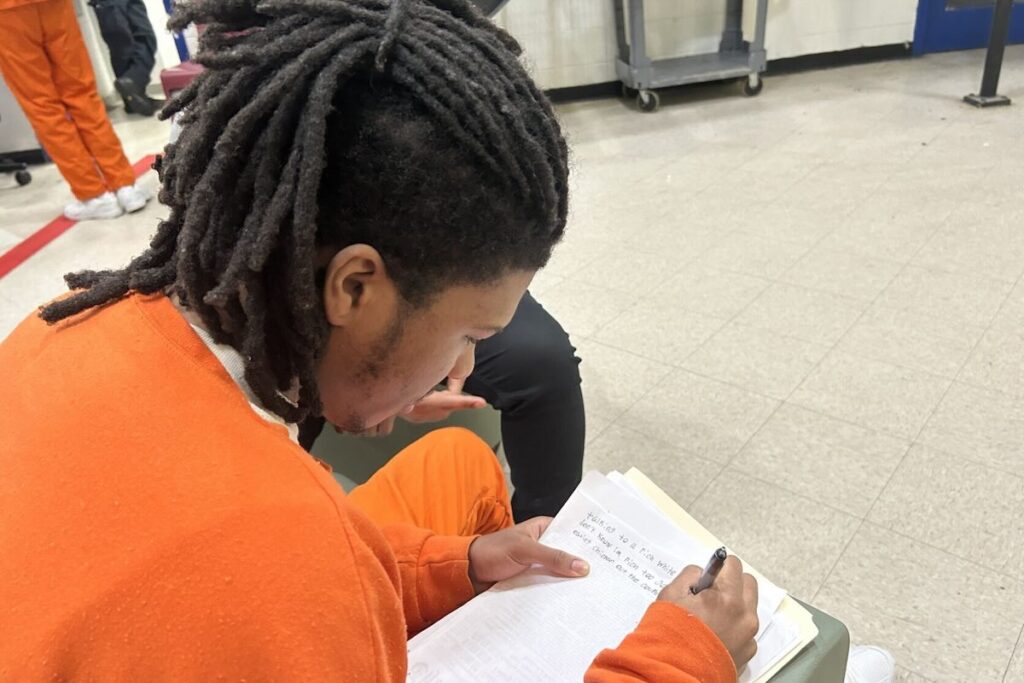
Inform us extra concerning the incarcerated younger individuals taking part in Mission Poetic Justice. Who chooses to take part and what motivates them?
The members are a various group of curious, passionate, and trustworthy people. Initially centered on 18-24 year-olds, this system now welcomes students of all ages to discover the worlds of poetry and musical composition. Mission Poetic Justice emphasizes inclusivity, permitting anybody to take part, regardless of their custody degree (e.g., minimal, medium, or most).
Given the unpredictable setting of the jail, session dynamics can change dramatically. Sometimes, a participant could return from courtroom looking for solace, or they might decide to attend a fitness center session as a substitute of this system. This fluidity signifies that the “cohort” can fluctuate every week. Presently, over 50 residents are engaged, taking part with no formal utility course of. Whether or not one needs to affix for a single lesson on metaphor or prefers to collaborate with composers often, all are welcome.
This open method fosters communal respect and permits members to specific themselves. By the third week, it turns into clear who’s intent on partaking. This 12 months, round 30 out of fifty eligible residents selected to take part. What motivates them primarily is the will for human connection. Many face video-only visitation, leaving them with out in-person interactions. The possibility to be taught from somebody outdoors the authorized or jail system is uncommon, and members are desperate to share their tales and reshape public perceptions of incarceration.
How would you describe the musical and poetic types explored by members?
The condensed nature of this ten-week program fosters a fast and vibrant trade of creativity. This construction is constructed on the inherent skills of the members, who typically shock with their abilities, sharing folders of poetry, tales, and heartfelt correspondence with family members. With just a little preliminary consolation, it does not take lengthy for them to have interaction enthusiastically in singing, rapping, clapping, and experimenting with devices. From the primary day, the creativity is obvious.
Supported by Poetry Instructing Artists from the Johns Hopkins Writing Seminars, this system introduces formal components of poetry, protecting fundamentals from metaphor to poetic construction. A lot of the work produced is free verse or follows easy rhyme schemes (e.g., AABB, ABAB). Members even have entry to a digital course containing pattern music and poetry, together with supplemental supplies for these desirous to take their work additional. The underlying perception is that poetry is for everybody, regardless of earlier information.
Relating to music, there aren’t any constraints on style or fashion so long as poet-composer pairs align. This 12 months’s various Resident Composer cohort ensures members are supported effectively. Though tools limitations imply fewer devices can be utilized, sources like mp3 information, a digital piano, and a modest collection of equipment encourage creativity.
Final 12 months, most members most popular others to carry out their works, leading to classical-inspired compositions. This 12 months, we’re witnessing a shift, with some desirous to carry out their very own creations as spoken phrase or rap, accompanied by our pianist or backing tracks. The evolution of their creative expressions is thrilling to look at!
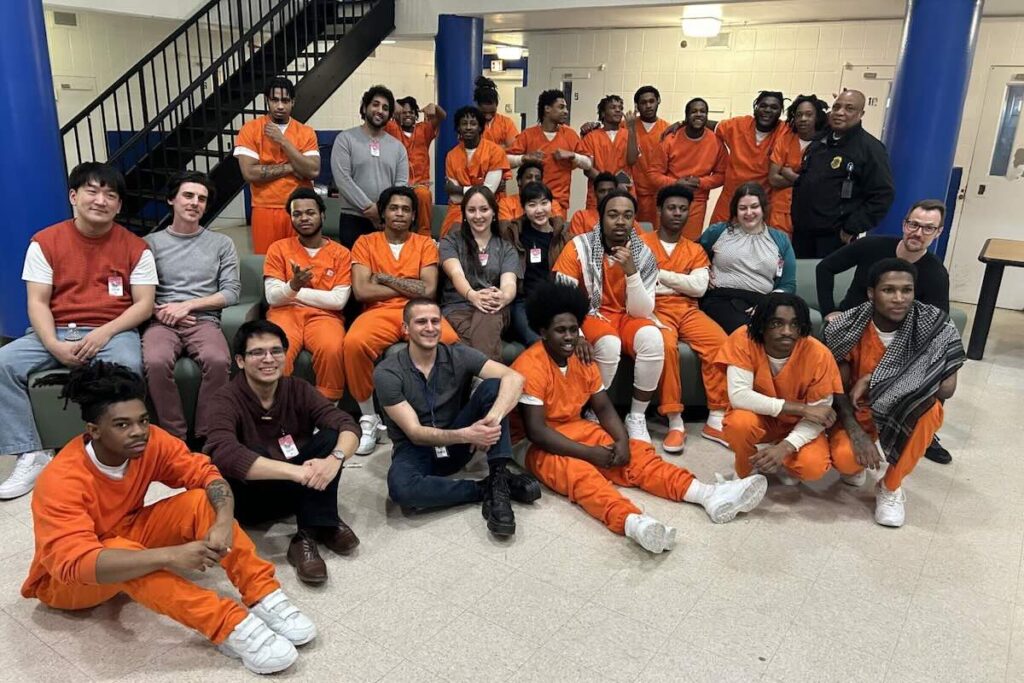
How have you ever noticed members’ relationships with music evolving over their ten weeks in Mission Poetic Justice?
This program has led to a exceptional transformation in members’ confidence and willingness to discover their artistic boundaries. People who as soon as hesitated to outline themselves as poets or performers progressively come to assert their creative identities in profound methods. A participant I’ll consult with as “T” was initially reluctant; he warmed up solely after I wrote to his choose to focus on his involvement within the challenge.
5 weeks later, “T” confidently carried out throughout our closing ceremony, utilizing a monitor produced by composer Nuburooj Khattak. Constructing belief and assembly members the place they’re enhances bonds and fosters dedication to this system. These small, human interactions are important. As an example, throughout a current go to, Nuburooj paused to wish together with members throughout the name to prayer, demonstrating surprising moments of connection.
The transformation seen in our members is due to open and provoking resident artists like Nuburooj. We’re intentional about hiring people who replicate the communal spirit of creative expression, cultivating a non-judgmental setting the place members can shed insecurities and embrace new experiences.
Mission Poetic Justice takes place within the DC Jail, recognized for its harmful situations; in 2025, its dying charge was 3.5 instances increased than the nationwide common. How does participation assist these younger males address their incarceration?
Having beforehand served as a university administrator for the DC Division of Corrections and labored as a particular educator in related environments, I’ve thought deeply concerning the objective of such packages.
A) It’s essential to focus on the determined want for our nation to rethink rehabilitation. Even in a jail with zero deaths, residents face every day dehumanization. B) Jails typically function transient areas, that means packages are sometimes short-lived (lasting six weeks to a couple months). This will restrict this system’s long-term affect on members. Thus, maximizing the affect of every session turns into important.
My method aligns with Jahmal Cole’s motto: publicity is essential. I consider Mission Poetic Justice considerably impacts members’ lives, bringing pleasure and potential to an in any other case stagnant setting. Importantly, we expose them to various abilities and concepts. We offer literary information to articulate their emotions and experiences, demystify songwriting, improve interpersonal abilities, and broaden their social {and professional} networks.
These insights and abilities ideally equip them to navigate their present circumstances with resilience. Even in adversity, I hope they will draw upon these experiences to persevere productively.
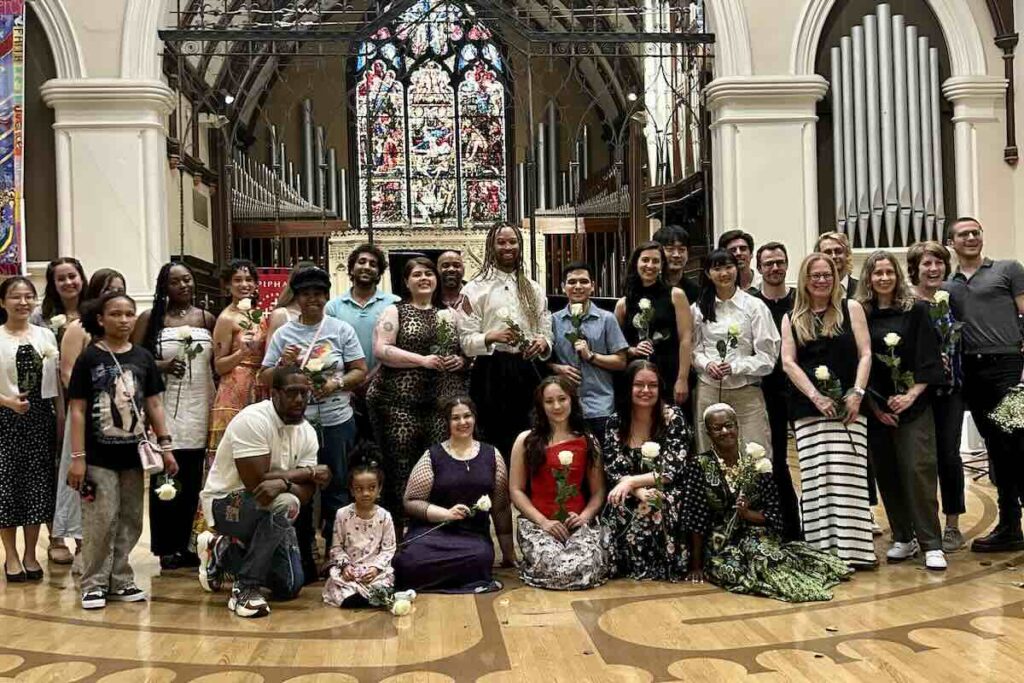
How has working with incarcerated youth influenced your individual creative observe?
A instructor as soon as advised me, “If you happen to simply let go a bit, you would possibly shock your self.” It’s a easy but profound perception that we regularly lose as we mature—our openness to surprising pleasure.
After present process some private challenges, I made a decision to check my MM recital on the DC Jail, recruiting over 40 residents from totally different housing models, lots of whom have been unaware of what they have been signing up for. Because the date approached, I felt anxious; would a program that includes Libby Larsen, Hanns Eisler, and Britten resonate with this viewers? I used to be too far alongside to again out.
To my amazement, the viewers’s engagement was palpable. Their reactions, together with the liberty I felt in my efficiency, helped spark the idea for Mission Poetic Justice and reconfigured my creative journey.
This similar dynamic unfolds with the lads taking part in this system. Their tales encourage me to reevaluate my worldview. Working in areas marked by profound battle—a dual-edged expertise of ache and necessity—breaks down obstacles, emphasizes humanity, and fosters genuine artistry. This interplay permits me to embrace the unpredictability in my profession trajectory.
Further Hyperlinks:
If you need to assist Mission Poetic Justice, contemplate donating by way of this GoFundMe Marketing campaign.
To attend the free or by-donation live performance on Might 2, 2026 at 450 Okay Road NW, Washington, DC, reserve your ticket right here. The occasion will function music created by the present cohort in addition to a significant panel dialogue concerning the significance of arts programming in carceral environments.
I CARE IF YOU LISTEN operates as an editorially-independent initiative of the American Composers Discussion board, supported by beneficiant donations and institutional backing. You’ll be able to contribute to ICIYL with a tax-deductible present to ACF. To be taught extra about ACF, go to composersforum.org.