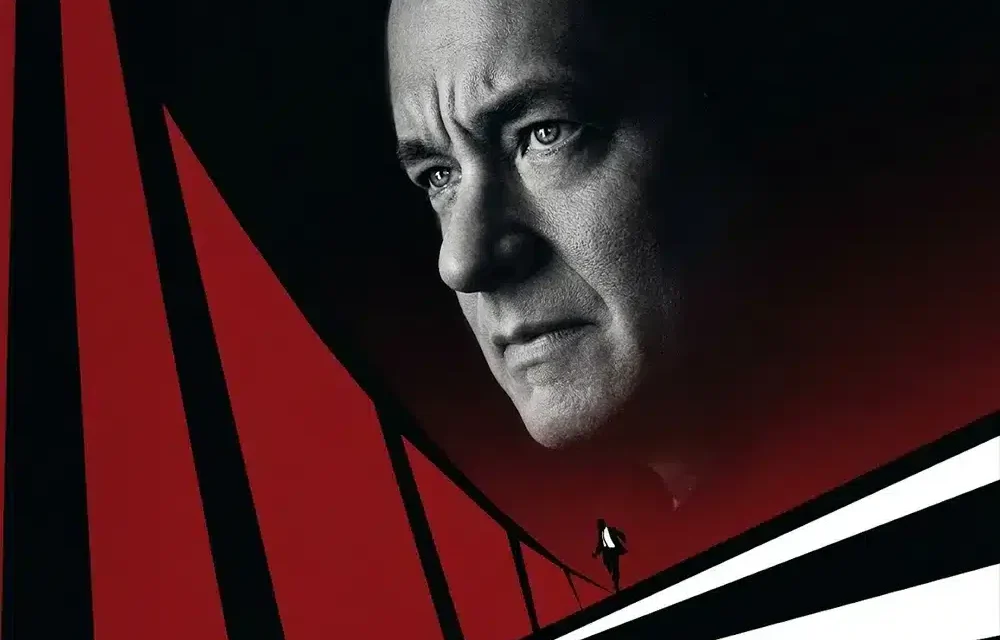
If you seek a counterpoint to the anti-immigrant sentiment prevalent during the Trump administration, consider the film Bridge of Spies. This 2015 Cold War thriller directed by Steven Spielberg, featuring Tom Hanks, may seem an unexpected source, yet it delivers a compelling reflection on American identity through a powerful monologue halfway through the film.
Bridge of Spies follows James Donovan, portrayed by Hanks, a modest New York insurance lawyer who gets “volunteered” for a daunting task during the Cold War: representing Rudolf Abel (Mark Rylance), a man accused and undoubtedly guilty of espionage for the Soviet Union. Initially reluctant, Donovan takes on the responsibility with an honesty that surprises those around him.
Donovan’s law partners, his wife, and even the presiding judge all perceive his role as mere performance, merely a façade to showcase America’s moral righteousness. There’s little expectation that Donovan will genuinely endeavor to defend Abel, as everyone believes that a guilty verdict is inevitable.
Shortly after taking the case, Donovan meets a nervous CIA agent named Hoffman (Scott Shepherd) at a dimly lit Manhattan bar, where the ambiance is filled with smooth jazz. Hoffman makes it clear that he believes he and his agency are entitled to all the information Donovan obtains from his client.
For Hoffman, the case is straightforward; Abel is a spy posing a threat to American security, and Donovan is expected to act in the nation’s interest by cooperating. Yet Donovan sees things differently. He feels a strong obligation, rooted in his professional ethics and the Constitution, to provide Abel with a fair defense. He expresses his annoyance at being asked to compromise attorney-client privilege.
Hoffman dismisses Donovan’s principles with a condescending scoff, implying that there’s no “rule book” in the harsh reality of the Cold War. He belittles Donovan for appearing too much like a Boy Scout, suggesting that withholding information could endanger national security. Undeterred, Donovan calmly responds:
You’re Agent Hoffman, right? German ancestry? My name’s Donovan, Irish on both sides—mother and father. So, I’m Irish, and you’re German. But what truly makes us Americans? Just one thing: the rule book we call the Constitution. We agree to these rules, and that’s what defines us as Americans. It’s all that defines us.
In this succinct yet impactful speech, Donovan conveys that America is a mosaic of immigrants united by a shared commitment to a set of rules. These rules mandate that every American, regardless of their background, must uphold the law impartially—even in cases involving an enemy spy.
The strength of his argument is matched by the calm assurance with which he articulates it. Throughout Bridge of Spies, Hanks delivers a performance marked by an unwavering tranquility, even amidst a series of high-stress scenarios. Donovan emerges as a character of principle, his professional skill intertwined with a quiet confidence in his values. He knows that by adhering to the “rule book” and providing a solid defense for Abel, he reinforces the very ideals that America stands for—showcasing the nation’s commitment to its principles, even in turbulent times.
However, Donovan’s advocacy for Abel is just the beginning of the story. Despite Abel’s conviction, Donovan successfully argues against the death penalty, eloquently presenting his case once more.
When a U.S. pilot is captured by the USSR, it is Donovan who is recruited by the CIA for a complex prisoner swap: Abel for the pilot. He agrees and travels to East Berlin, witnessing the ominous construction of the Berlin Wall.
During his negotiations with officials from East Germany and the Soviet Union, Donovan manages to secure the release of both the pilot and an American student. Spielberg, working with a sharp screenplay by Matt Charman and the Coen brothers, adeptly tells this behind-the-scenes Cold War narrative, reminding us that he is more than just a blockbuster filmmaker. Bridge of Spies is not only captivating and rewatchable, but it also leaves a lasting impression, particularly through Donovan’s crucial speech about the “rule book.”
Released during the closing days of Obama’s presidency—a time characterized by a hopeful belief in American progress—Bridge of Spies stands out as a testament to American decency, as noted by critic Anthony Lane. From the vantage point of today’s political landscape, tainted by ongoing assaults on democratic ideals, the film’s unshakeable faith in America’s inherent goodness can seem overly optimistic—or even cringe-worthy. After its release, it garnered six Oscar nominations, including Best Picture, but its resolute embrace of legal integrity and immigration as fundamental American virtues now feels like a relic of a different era.
Yet, these same qualities render Bridge of Spies essential viewing today. In our current moment, echoing calls for resistance against the damaging policies of the Trump administration must also extend to a broader philosophical discourse.
There’s a faction within American conservatism that promotes the notion of a ‘true’ American—often defined by white Anglo-Protestant heritage. This nativist thinking fuels practices like the ICE raids terrorizing communities and attempts to revoke birthright citizenship. Autocratic movements often rationalize their policies as defensive measures against perceived threats from those who do not share this ‘heritage.’
This ideology is fundamentally flawed. As Lindsey Graham aptly stated, “America is an idea, not defined by its people but by its ideals.” One of those ideals, articulated by Donovan in Bridge of Spies, asserts that being American is determined not by birthplace but by adherence to the Constitution.
Those opposing the Trump administration must realize that reacting to unlawful actions like immigration raids is only the first step. It’s equally imperative to confront the misguided beliefs that justify such actions. Leaders and citizens alike need to assert that immigration has always been central to the American experience. Unless people engage in the battle of ideas, efforts to protect immigrant communities will face steep challenges against the rising tide of nationalism.
In a polarized climate, a ten-year-old film featuring Hanks might seem an unlikely source of inspiration for contemporary anti-immigrant resistance. Yet Donovan’s straightforward perspective encapsulates how Americans can start advocating for a nation that cherishes its immigrant origins rather than punishes immigrants.
Bridge of Spies also sheds light on a crucial aspect of Hanks’ cinematic persona. Often compared to the likes of Jimmy Stewart, he embodies the relatable everyman whose decency and integrity resonate as symbols of American virtue.
Yet, this comparison often falls short, as the emotional ranges of Stewart and Hanks differ significantly. Stewart was known for his passionate expressiveness, exemplified in roles such as in Mr. Smith Goes to Washington, where his character’s fervor highlighted the battle against corruption. Hanks, on the other hand, excels in characters defined by serene self-assurance, as seen in Apollo 13 and Saving Private Ryan.
A more fitting comparison may be Gregory Peck. Like Stewart, Peck’s roles epitomized everyday American values, but he conveyed them through a lens of restraint rather than emotional tumult. In Bridge of Spies, Hanks’ composed portrayal of Donovan offers a contrast to today’s toxic political discourse. Rather than raising his voice or resorting to theatrics, Donovan articulates his beliefs calmly, facilitating a reasoned discussion.
Donovan grasps the essence of what America represents, confidently advocating for righteousness. He understands that grand emotional displays do not strengthen his convictions; they only detract from his credibility.
Works Cited
Boone, Daniel. “The Online Right’s Favorite Nativist Slogan Is Gaining Traction in the Real World.” Politico. 31 July 2025.
Conn, Jordan Ritter. “Inside the Hidden Network of Resistance in Minneapolis.” The Ringer. 19 February 2026.
Herron, Patrick. “Maryland Joins 24 States Opposing Executive Order on Birthright Citizenship.” Mocoshow.com. 27 February 2026.
Jones, Nate. “That Feeling You Recognize? Obamacore.” Vulture. 20 August 2024.
Lane, Anthony. “Making the Case.” New Yorker. 19 October 2015.
O’Brien, Matt and Toropin, Konstantin. “Trump orders US agencies to stop using Anthropic technology in clash over AI safety.” AP. 27 February 2026.
The White House.gov “Protecting the Meaning and Value of American Citizenship.” 20 January 2025.