As of late, the colourful world of jazz is experiencing a renaissance, significantly on the subject of the vibraphone, or vibraharp. This beautiful mallet instrument is thought for its resonant sound, embodying a wealthy mix of chill and blues, harking back to legends like Lionel Hampton and Milt Jackson.
Historically, the jazz scene featured one or two main vibes artists, however now we’re witnessing an emergence of a number of gifted gamers who’re pushing the boundaries of the craft. Patricia Brennan is composing and main spirited ensembles that redefine the instrument as a type of percussion. Joel Ross fluidly navigates the harmonic panorama, demonstrating that the vibraphone has a spot all over the place in music. Warren Wolf brings a strong soulful vibe, whereas Joe Locke delivers fascinating ballads. Percussionist Ches Smith additionally superbly incorporates this instrument into his work, alongside established artists like Gary Burton, Steve Nelson, and Stefon Harris, who proceed to shine of their craft.
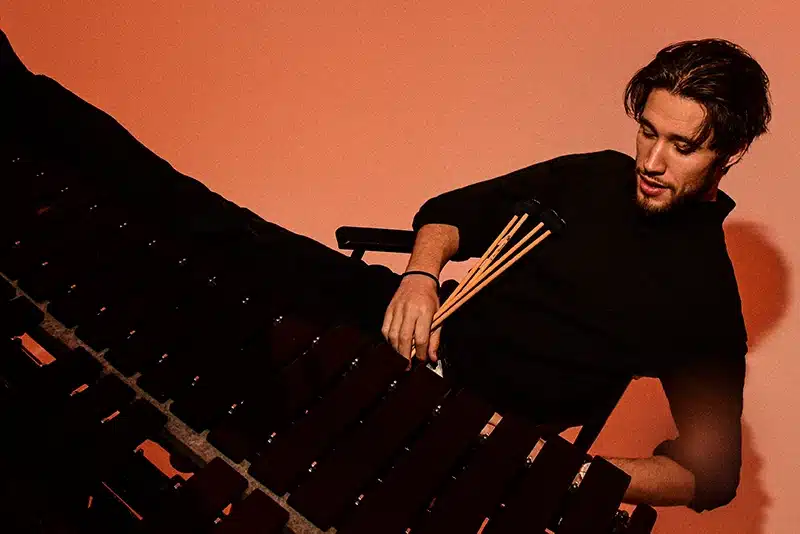
Among the many present vibraphone expertise is Simon Moullier, who’s making a reputation for himself together with his newest album, Ceiba. This marks Moullier’s third launch together with his quartet, which options pianist Lex Korten, bassist Rick Rosato, drummer Jongkuk Kim, and visitor percussionist Keita Ogawa on two tracks. The album locations Moullier’s authentic compositions entrance and heart, presenting ten tracks that remember melody, rhythm, and temper.
Initially from France and now residing in New York, Moullier has crafted his ensemble right into a cohesive unit. The group possesses a particular sound that’s each basic and recent. Somewhat than counting on daring metric shifts or advanced harmonies, their music is fluid and accessible, showcasing a robust, authentic synergy among the many musicians.
The monitor “Historic Ones” stands out as a exceptional efficiency. Moullier’s vibraphone sound is distinct, characterised by shimmering notes that resonate superbly, enhanced by an nearly subliminal vocal concord. On this piece, he performs the melody in a fascinating unison with Korten’s piano, creating an distinctive kinship between the 2 devices. The connection between vibes and piano typically poses challenges for musicians, but on this band, it feels extremely synergistic.
Korten expertly crafts his half to offer the impression that the vibes and piano are two arms sculpting a single masterpiece. When the rolling melody shifts right into a jagged stop-time second, Kim elevates the sound, whereas Rosato offers a cool undercurrent that enables each the piano and vibes to shine much more brightly. Moullier’s subsequent solo is each lyrical and liberated, with Korten completely syncing into the rhythm part.
In “Apollo,” Moullier really shines, as his interaction with the piano fosters a compelling solo that rides the tune’s 6/8 groove. His method is unflashy but laden with rhythmic surprises, showcasing his delicate phrasing. The climax of the piece includes a second the place he momentarily strays from the chordal sample, solely to gracefully return, leaving listeners breathless.
Moullier’s energetic efficiency additionally conjures up innovation, significantly within the mid-tempo monitor “Iron Big,” a reimagined blues kind. Right here, the chief embodies a sound that Milt Jackson may need crafted, even incorporating distinctive sound distortions throughout his solo’s peak.
When you yearn for that elusive swing in trendy jazz, Moullier’s tribute to Bobby Hutcherson, titled “Mr. Hutcherson,” actually delivers. Rosato lays down a strong groove whereas Kim creates a dynamic, rustling swing harking back to modern masters like Ralph Peterson and Jeff Watts. The composition affords a catchy lick infused with a quick swing and contrasts it with a half-time interlude, resulting in Korten’s dazzling solo.
Korten is a flexible pianist, absorbing a variety of recent jazz vocabulary. In his solo throughout “Mr. Hutcherson,” traces of early Chick Corea and echoes of McCoy Tyner might be heard, together with the lyrical grace of Keith Jarrett and Brad Mehldau. Whereas Korten’s latest management mission showcased his modernist method, he skillfully channels that creativity into extra mainstream jazz with this quartet.
Korten significantly captivates on the ballad “Lotus, Pt. 2,” the place he crafts splendid traces that superbly complement Moullier’s luscious vibes. The band transcends conventional solos, embracing collective improvisation that showcases everybody’s abilities whereas avoiding overlaps. The spectacular dynamics Kim creates invite the group into deeper emotional territory, subtly reflecting Korten’s personal artistry.
Because the pianist introduces the ballad “Voices of the Wind,” he weaves a fragile tapestry of sound, using the piano’s pedals to superbly blur the harmonic essence. The written melody varieties an excellent collaboration between vibes and piano, whereas Rosato delivers a fascinating bass solo that serves as a spotlight inside this melodic panorama.
On two tracks, Moullier enriches the sound by inviting percussionist Keita Ogawa to affix in. “Fuji” opens with a fab bass/piano unison line harking back to nice Cedar Walton compositions. Rosato anchors the rhythm, as Kim and Ogawa have interaction in a percussion interaction that finally varieties a stunning duet. “Baiāo” presents a flowing melody enhanced by Ogawa’s syncopated Afro-Cuban rhythm.
Ceiba is Simon Moullier’s sixth album as a bandleader, and it has each factor to be his breakthrough launch. Its elegant marriage of custom and innovation affords a fascinating expertise for listeners.