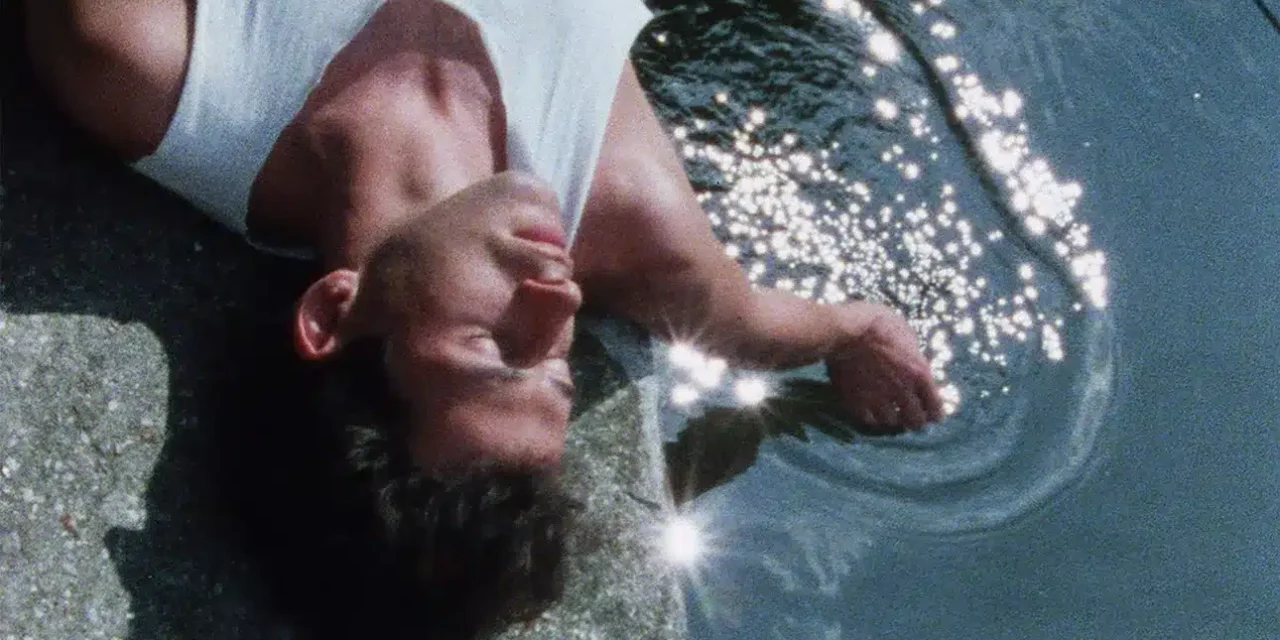
Teo Hernández describes movie as “intercourse trying to find the solar as a accomplice” in his brief piece Three Drops of Mezcal in a Glass of Champagne (Trois gouttes de mezcal dans une coupe de champagne, 1983). This 16-minute movie is featured in a retrospective on the Museum of Trendy Artwork (MoMA), showcasing Hernández and his contemporaries.
In line with MoMA’s notes, Hernández was a pioneering experimental filmmaker who utilized a Tremendous 8 millimeter digital camera. Initially from Mexico, he roamed the world earlier than making Paris his house in 1975. Over his profession, he crafted greater than 150 movies, typically collaborating with buddies and lovers like filmmaker Gaël Badaud and his protégé Michel Nedjar. Hernández handed away from AIDS-related problems in 1992, forsaking a unprecedented physique of detailed and thoroughly crafted works. The museum highlights round 19 of his movies together with others by Nedjar, who additionally operated beneath the title Jakobois.
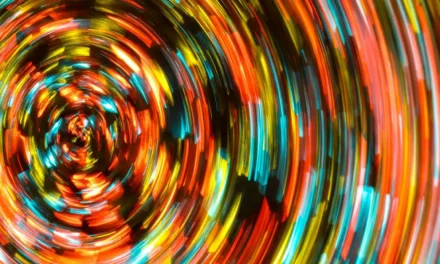
Hernández’s early works are characterised by static, campy dress-ups that evoke non secular and mythological motifs, drawing parallels with famend avant-garde artists resembling Kenneth Anger and Maya Deren. He later realized that dynamically participating with the digital camera—shifting it, zooming, and blurring topics into summary types—grew to become a liberating ritual of ecstasy. His movies might be likened to Jackson Pollock’s creative expressions, inducing a meditative state in viewers.
Teo Hernández’s Mind-Rewiring Cinema
Hernández is drawn to cityscapes and imagery of Christ, depicted by symbols like sipping wine from a grail, slicing bread, and embracing introspective moments. These recurring themes meld together with his fascination for dizzying movement and frenetic montage, creating a visible onslaught of repeated motifs that problem viewers’ perceptions.
Certainly, the expertise might be overwhelming, particularly with lots of his options extending into substantial lengths. The relentless, kinetic model can induce fatigue, main the viewers’s eyes to blink and mimic the barrage of visuals. But, amid this complexity, there is a hypnotic magnificence—a possible supply of each stimulation and mindfulness, maybe greatest skilled beneath the affect of caffeine.
His movies, primarily silent, layer sounds from varied sources, together with recordings of emotive Spanish melodies or ambient noises like waves and vague city chatter. Stunning males typically grace his frames, typically portrayed nude in each celebratory and mundane contexts. For inclusion, he additionally options younger ladies.
Three Drops of Mezcal in a Glass of Champagne stands out in MoMA’s show as the only piece with narration, performing nearly as a manifesto. The preliminary visuals current what looks as if a black skyscraper in opposition to an overcast sky. Hernández’s voice contemplates the essence of cinema, calling it “a drop of sperm, a drop of ocean, a drop of dream.” This melding of magic and desires projected onto actuality underscores the emotional journey of cinema. Getting into this world barefoot and empty-handed, Hernández delivers a message that resonates fantastically in French.
Because the narrative unfolds, he presents images of his father over a wide ranging Parisian panorama, culminating in a poignant picture of his father’s coffin being laid to relaxation. In true Hernández vogue, the movie begins its typical flurry of rapid-fire visuals, illustrating profound statements resembling “There’s a physique on this mirror, there’s a mirror on this physique…” weaving existential observations that mirror on the interconnectedness of life and artwork.
Teo Hernández’s Brief Movies of Journey and Transcendence
The Voyage to Mexico (Le Voyage au Mexique, 1990) affords a montage of “vacationer photographs” of church buildings, streets, and bullfights, all characterised by fast cuts and an audio backdrop of public noise. Souvenirs-Florence (1981-82) showcases comparable stylings set in opposition to the backdrop of Italy, paying specific consideration to beautiful nude statues juxtaposed with fleeting glimpses of passersby. In the meantime, Nuestra Señora de París (1981-82) delivers a radical interpretation of Notre Dame, specializing in its stained glass and gargoyles, complemented by an industrial soundscape that mixes chants with video game-like results.
A private flashback: Throughout a childhood go to to Germany, I skilled the joys of capturing my very own footage on an 8mm digital camera, making a brisk meeting of moments—from a household house to the individuals I met. My chaotic modifying drew laughter from my mother and father, however I discovered magnificence within the fast cuts—a sensation that resonates with Hernández’s cinematic strategy.
Within the silent brief Pas de Ciel (1987, 27m), dancer Bernardo Montet embodies free expression in opposition to a backdrop of dynamic zooms and spins, evolving from full apparel to one thing extra revealing. Although I would recommend to Hernández that typically magnificence resides in the subject material itself somewhat than the frantic modifying, it is evident that his intentions lie elsewhere. Montet, notable for his choreography of Claire Denis’ Beau Travail (1999), performs with exuberance all through the piece.
Tables d’hiver (1978-79) gives a extra deliberate exploration, capturing daylight’s passage throughout rooms whereas Hernández and buddies traverse the house like ephemeral shadows. Right here, the filmmaker’s nudity speaks to the intimacy of his artwork. This movie blends documentary-like components with efficiency as Hernández engages with materials and candles, culminating in a reflective piece that showcases each the fluidity of time and the tender connections we share.
One other brain-altering brief, Mesures de miel et de lait sauvage (1984), entices with a silent journey by limitless close-ups of on a regular basis objects, mixing collectively by a kaleidoscopic modifying method. Every shot—whether or not of a kid, a fruit, or a discarded wrapper—carries equal weight, culminating in a poetic exploration of humanity and the world round us. Hernández’s fascination with Marlene Dietrich is clear as effectively, making appearances alongside others in montage sequences, evoking a way of shared cultural reminiscence.
The Physique of the Ardour
The feature-length The Physique of the Ardour is an ensemble of 4 movies, with the primary two—Cristo (1977) and Cristaux (1978)—working as thematic puns.
Cristo runs simply over an hour, combining quite a few components resembling keys, reddish meals, and reflections on existence as people enact poses paying homage to traditional work, shifting at a languorous tempo. The ethereal songs accompanying these visible motifs converge with pictures of bare males in a pastoral setting, finally reflecting on freedom and wonder.
In Cristaux, which extends to 85 minutes, Hernández explores the interaction of sunshine and texture with ambient sounds. The movie begins with a person gazing right into a crystal sphere, prompting introspection and evoking themes of information and actuality. The visuals pivot between projections of males’s our bodies and symbolic objects, inviting cautious contemplation on each body.
Subsequent is the expansive Lacrima Christi (1979-80), clocking in at over two hours with sensory montages of markets, cemeteries, and visceral interactions with meals and nature. Its audio, full of pure sounds, shapes our expertise, specializing in motion and spirituality somewhat than faith.
The silent Graal (1980) evokes transcendence by kinetic visuals and fast modifying. With younger males sharing a purple goblet beneath blossoms, the movie blurs the traces between delusion and actuality, inviting audiences to meditate on their very own interpretations.
Maya Takes the Veil, Lifts the Veil
With the movie Maya (1978-79), which runs for 103 minutes, Hernández brilliantly encapsulates the great thing about his aesthetic. The time period “Maya” signifies the phantasm we expertise inside actuality, symbolized by varied veils all through the piece.
The fast digital camera motion in Maya obscures concrete imagery whereas fleeting glimpses of nature emerge, revealing a girl (Parvaneh Navai) shrouded in a veil, evoking a way of mythological attract. This evolves into scenes of her exploring tidal swimming pools, additional enhancing the movie’s dreamlike high quality.
The soundscape shifts to incorporate roaring water, floral imagery, and vivid reflections because the narrative unfolds, illustrating the duality of tranquillity and problem—an indicator of Hernández’s works that finally rewire the viewer’s mind.
This in depth showcase at MoMA runs by Could 26, 2026, marking the primary Hernández-centered retrospective within the U.S. Audiences will possible discover themselves captivated and perplexed by the extraordinary magnificence and liberating high quality of Hernández’s artwork, which blurs the traces between life, work, and creativity—a testomony to a visionary who devoted his existence to exploring the transcendence of his medium.