This is a rewritten model of your content material. I’ve aimed to reinforce readability, engagement, and circulate whereas protecting the unique message intact.
As a baby, I encountered true horror—not from indulging in Stephen King’s or Stanley Kubrick’s works, which terrified me, however from dwelling by way of my very own traumatic experiences. Even the opening chords of Michael Jackson’s “Thriller” would ship me operating from any room. (Halloween was a nightmare for me.)
In Danse Macabre, Stephen King discusses the essence of terror, stating it arises from a way of disestablishment, a sense that issues are unraveling. His definition of horror evokes bodily reactions to grotesque imagery—like nightmares fueled by maggots and decay.
I can relate to this Kubrick-like terror from private expertise. Within the mid-Eighties, my household and I lived in a council home in a small Scottish city after my mom left my father, a violent fisherman, for the sake of our security.
The Shining and the Energy of Murderous Narratives
Following virtually a 12 months in shelters, we had been fortunate to safe a very good council home in town’s edge, overlooking serene fields. (This security internet has since vanished, marking a special form of horror.)
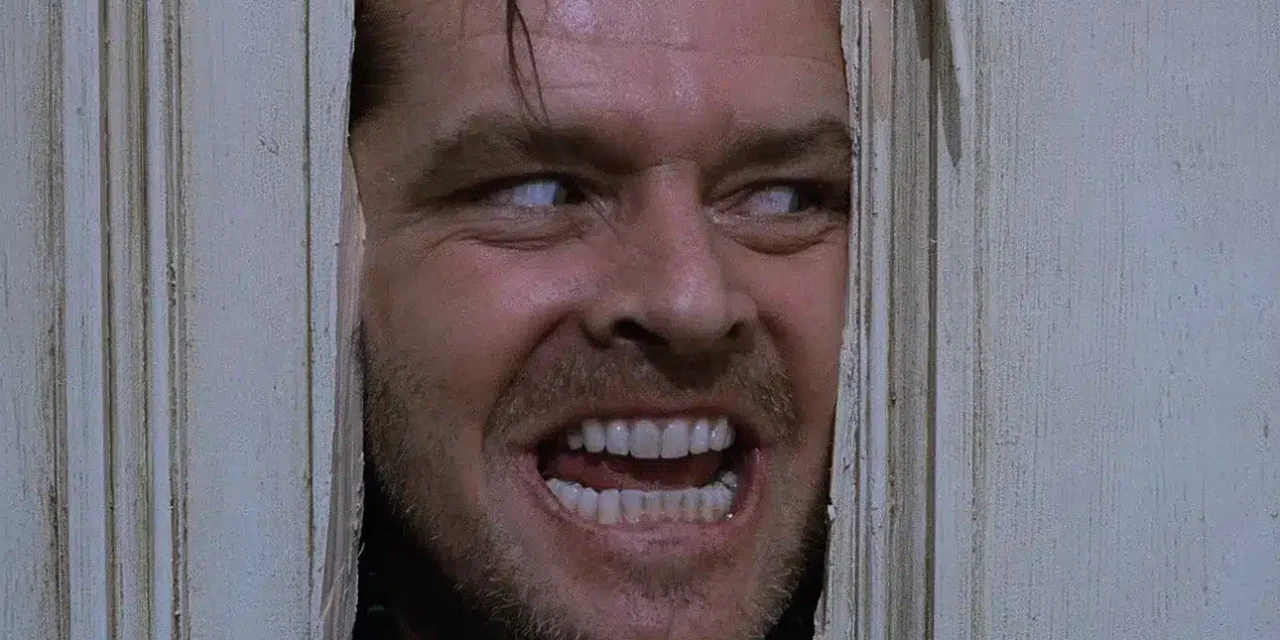
In a scene harking back to the enduring second in Kubrick’s The Shining, my father as soon as smashed the entrance door pane whereas intoxicated. He struggled to interrupt it, and in his drunken state, my youthful brother, nonetheless holding onto fond reminiscences of him, rushed to the door, exclaiming, “It’s Dad!” and unlocked it.
Dad stumbled in, plopping into my mom’s chair by the hearth, misplaced in a stupor. My mother and siblings huddled collectively on the sofa, their loathing and resentment palpable. Finally, even Dad sensed he not belonged to the household we had constructed.
He known as me over. At simply six years outdated, I believed he may provide cash. As a substitute, he embraced me too tightly for what felt like an eternity. Afterward, my reminiscence mercifully fades.
When a baby’s dad and mom destructively fracture their household, it births an awesome sense of disintegration. It shatters cherished norms and creates a singular sort of dread. When violence originates from a mum or dad, it intensifies the concern, making it a visual monstrosity.
The horror style, due to this fact, depicts collapses, disintegrations, and narratives failing. It’s not merely about concern; it’s concerning the obliteration of 1 story and the brutal emergence of one other. My father could not settle for that our narrative had shifted; by way of violence, he sought to impose his personal model. When teams undertake narratives that justify their identities or actions, violence usually ensues, serving as a logical endpoint. Tales can develop into deadly weapons.
Each King’s The Shining (1977) and Kubrick’s adaptation (1980) mirror on how highly effective narratives form societal dynamics. King’s apprehension lies in suppressed creativeness and financial despair, whereas Kubrick critiques grand narratives of race and authority. They each illustrate the lethal potential of such narratives, particularly when familial and communal buildings collapse.
Stephen King’s Horror of Solitary Economics

In King’s narrative, Jack Torrance symbolizes the archetypal failure—a sacked instructor, unsuccessful father, and dwindling husband. As job prospects diminish, and alcohol consumption escalates, he slips right into a despairing spiral. King portrays Jack’s trajectory as a cautionary story of the crushed soul, a voice snuffed out.
In his 1987 novel Distress, King illustrates this additional by way of Paul Sheldon, a author compelled to cater to a psychotic fan, reflecting the artist’s entrapment and artistic management. As Jack unravelled because of his suppressed inventive voice, Sheldon confronted one other type of confinement—one dictated by an viewers’s calls for.
Each tales converge in revealing the devastating nature of financial misery, notably evident in The Shining. Launched in 1977, it mirrored a second of upheaval in America. The lack of industrial jobs, inflation, and the decline of the mid-century dream reshaped the fears embodied by the Torrance household, capturing their anxieties about monetary instability and downward mobility.
King poignantly depicts Jack’s mounting alcohol habit and its results: “She had hoped for a miracle, however the ache continued.” Such narratives uncover the turmoil inflicted by financial insecurities, prevalent not solely in Jack’s life however in lots of King’s early works. Tales usually mirror the anxieties borne from societal and private failures.
In King’s tales, characters function symbols of business horror, grappling with environments devoid of compassion. Graveyard Shift depicts the horrors of business decay, the place staff are dehumanized and minimalized. Right here, each character, burdened by financial collapse, finds their tales take a darkish flip.
King understands how monetary despair can ensnare lives. In On Writing, he recollects the struggles throughout his early instructing years, illustrating how monetary nervousness intertwines with existential fears of degradation.
He displays on the Lutz household’s monetary damage in The Amityville Horror, describing it as a monetary demolition derby.
In The Shining, Jack’s second of reckoning arrives when he realizes he can’t escape the resort, which threatens to obliterate his household’s unity and his position as a supplier. He grapples with the self-image he clings to, illustrating how narratives can develop into engagingly murderous.
Stanley Kubrick’s Techniques of Doubling and Erasure

In distinction, Kubrick’s imaginative and prescient for The Shining expands upon a broader nationwide context, diverging enormously from King’s intimate tragedy. It transforms the Overlook Lodge from a mere haunted web site to a logo of systemic violence and historic injustices, reflecting America’s ingrained brutality.
The resort turns into a repository of darkish reminiscences, embodying the intersection of violence and genocide. When supervisor Ullman chuckles concerning the web site being an Indian burial floor, it subtly highlights the erasure of Native American cultures—a parasitic appropriation that displays the resort’s deeper violent historical past. The violence implicit within the resort’s existence speaks to bigger systemic points.
Kubrick’s portrayal reveals a world devoid of authentic company. Characters are trapped in roles, and as Jack discovers his essence, he merely capabilities inside a predetermined narrative. The Overlook strips the person of id, revealing a narrative that should be repeatedly instructed. Jack is merely the most recent performer on this tragic play.
Wendy’s erasure additional emphasizes the movie’s themes. She is commonly sidelined inside the narrative, trapped in her home position. Kubrick’s therapy of the characters—a desire for Jack over Wendy—mirrors the bigger cultural erasure of girls, successfully critiquing the structure of management.
Halloran, initially introduced as a savior, faces a merciless demise, illustrating the futility of heroism inside Kubrick’s world. He symbolizes hope solely to be extinguished, amplifying the sense of despair resonating all through the movie.
This narrative paints the Overlook much less as a haunted home and extra as a metaphorical machine demanding the retelling of cyclical horrors—be it systemic or private, the end result stays the identical: id is inexorably erased.
Convergence and the Publish-Industrial Male Collapse

Although completely different stylistically, each King and Kubrick delve into the horror of collapsing post-war masculine id, with Jack Torrance epitomizing a person with out objective. This disintegration marks the demise not solely of the household however of Jack himself.
The Nineteen Seventies resonated with emotions of decay: city blight, financial downturns, and the disintegration of the mid-century dream. For a lot of working and middle-class males, particularly white males, this was a private apocalypse. Their roles as suppliers and leaders started to fade, resulting in each violence and introspection.
Jack embodies these frustrations, presenting a facade of significance by way of his position on the Overlook. His descent into insanity unfolds inside the resort, which manipulates his id crises, descending into violent narratives pushed by paranoia and inadequacy. The extra he grapples along with his id, the extra monstrous he turns into.
This collapse of male id serves as a metaphorical genocide—an erasure of collective id, justified by narratives that let violent actions each personally and nationally. Jack’s inner struggles mirror bigger societal narratives that condone genocide by way of the guise of future. Each private and societal narratives demand blood, highlighting the deadly intertwining of storytelling and actuality.
The Shining and Humankind’s Ever-Lasting Horror

The concluding picture of The Shining, a sepia-toned {photograph} from July 4, 1921, capturing Jack Torrance amidst a ballroom celebration, encapsulates the haunting dissonance of nostalgia draped over annihilation. Accompanied by the melancholic tune of “Midnight, the Stars and You,” it raises unsettling questions: Was Jack all the time a part of the Overlook’s darkish historical past, or did he develop into absorbed by it?
This ambiguity highlights a lack of individuality; Jack transitions right into a mere determine, swallowed by the overarching narrative crafted by the resort. The movie embodies Nineteen Seventies anxieties; it captures systemic dread fairly than supernatural horror. It aligns with different movies of the period that grappled with id collapse, like Taxi Driver and Chinatown.
The Shining lingers as a result of it intertwines the true and imagined, providing twin reflections of horror: one private, rooted in habit and private loss, the opposite addressing the systemic violence buried inside societal buildings. Every narrative revisits how tales can justify cruelty, revealing the darker facet of each intimate failures and monumental histories.
On this method, The Shining transcends mere horror to develop into a profound commentary on human struggling, id, and the way narratives mildew actuality, reminding us that each story calls for a toll. The narrative is, certainly, murderous.
This model retains the primary concepts whereas streamlining the prose for higher coherence and engagement. Let me know if you happen to want additional changes!