Morrissey’s newest album, Make-Up Is a Lie, gives a recent perspective on the singer’s extraordinary life. It narrates the journey of a lonely boy in Manchester, exploring the inspirations that formed him, the miracles created in a outstanding musical partnership, and the masks he has worn—together with the toll they actual. To delve deeper into the artist’s psyche, let’s look at the connections between Morrissey’s lesser-known passions and this newest work.
Winding by way of cobblestone streets beneath dreary northern skies, the album displays on his childhood, teenage years, musical epiphanies, fame, heartbreak, and the parallels between his life and people of his ill-fated heroes. At its core, it serves as a meditation on the breakup of the Smiths and the failure of makes an attempt at reunion. By highlighting key symbols and references, we are going to uncover their meanings.
All through his 43-year songwriting profession, Morrissey has usually employed wordplay, double entendre, and malapropism to infuse his works with wit, irony, and absurdity. Nonetheless, in his newer albums, reminiscent of Low in Excessive College (2017) and I Am Not a Canine on a Chain (2020), this cleverness has given method to a extra easy method. But, in Make-Up Is a Lie, Morrissey returns to a extra intricate type, delighting each symbolists and logophiles alike.
Morrissey’s Embrace of Oscar Wilde
Upon the discharge of the lead single for Make-Up Is A Lie in February 2026, a number of peculiarities grew to become obvious. The lyrics felt uncommon, the music deviated from Morrissey’s typical sound, and the album artwork exuded an unsettling vibe. In hindsight, it’s clear he sought to seize our consideration.
The title observe options an entrancing, repetitive rhythm that pauses earlier than a counted “1,..2,..3,4,5!” launches a robust ultimate chorus. In a current efficiency in Zaragoza, Morrissey dramatically bent on the waist, gestured to an imaginary tombstone, and counted the 5 phrases inscribed on it, emphasizing them earlier than strongly reiterating the chorus. This theatricality was echoed in his subsequent present in Seville.
Right here, Morrissey subtly invitations us to have interaction with Wildean-style wordplay, as he shifts from 4 phrases (Make-Up Is a Lie) to 5 (Make Up Is a Lie), hinting at a double that means. This system, acquainted to Morrissey’s followers, explores the themes of artifice and reconciliation, particularly in relation to Wilde’s legacy of masks and failed reunions. The complete album was launched 25 days later — a short wait given the curiosity sparked by its hanging sound and imagery.
After a six-year hiatus since his final album, I Am Not a Canine on a Chain, skepticism surrounded this new providing. Reactions to the one have been blended, mixing lukewarm reward, disbelief, and even accusations of AI-altered paintings, amid a handful of enthusiastic responses. Some speculated that he is likely to be sharing a darkish joke, likening it to taking a girlfriend swimming on the primary date to unveil her true self.
The Artists’ Highly effective Masks
When Make-Up Is a Lie lastly arrived and I positioned the needle on the smoky crimson vinyl, its secrets and techniques have been sluggish to disclose themselves. Though two issues have been instantly clear—the voice remained evocative and delightful, and the brand new band’s first studio effort dispelled any skepticism. The sound is much less guitar-centric, favoring dreamy, surreal tones that complement the ornate lyricism.
A Parisian theme emerges, connecting the title observe, “The Monsters of Pig Alley,” and “Boulevard.” On the forefront of Morrissey’s influences is Oscar Wilde, who rests within the iconic Père Lachaise Cemetery. Wilde’s tumultuous relationship with Lord Alfred Douglas serves as a becoming backdrop, given the temporary reconciliation post-prison that led to Paris—a metropolis synonymous with loss and longing.
After Wilde’s launch from jail, he and Douglas reunited in August, however their relationship shortly descended into tumultuous arguments, culminating in a breakup round Christmastime. The sleigh bells in “Boulevard” resonate with this timeline, additional strengthening the connection. Concurrently, “Make-Up Is a Lie” harbors profound that means behind seemingly trivial lyrics, paired with avant-garde instrumentation, embodying Morrissey’s enduring admiration for Wilde.
In his 1891 essay, The Critic as Artist, Wilde asserts: “Man is least himself when he talks in his personal individual. Give him a masks, and he’ll let you know the reality.” This means that dismissing persona as mere deception is disingenuous, emphasizing the need of contemplating how we exist inside societal contexts. On this gentle, the title “Make-Up Is a Lie” may deal with projected pictures—the masks itself changing into a lie.
Morrissey has traditionally been a non-public determine, seldom discussing his relationships. Initially, he offered a persona of accessibility, inviting followers to affix him on stage. Nonetheless, post-Smiths, his public picture hardened, leaning in the direction of darker themes of seedy undercurrents and confrontational narratives, which shifted his viewers.
As Make-Up Is a Lie explores the price of these masks, Morrissey is likely to be changing an previous one with a recent reality that acknowledges previous wants now out of date. This theme of tried reconciliation may mirror his fleeting efforts to fix ties with Johnny Marr, as recounted in his 2013 memoir, Autobiography, culminating in a fraught change encapsulated within the assertion, “I KNOW NOTHING!”—an echo of Wilde’s and Douglas’ conflicts.
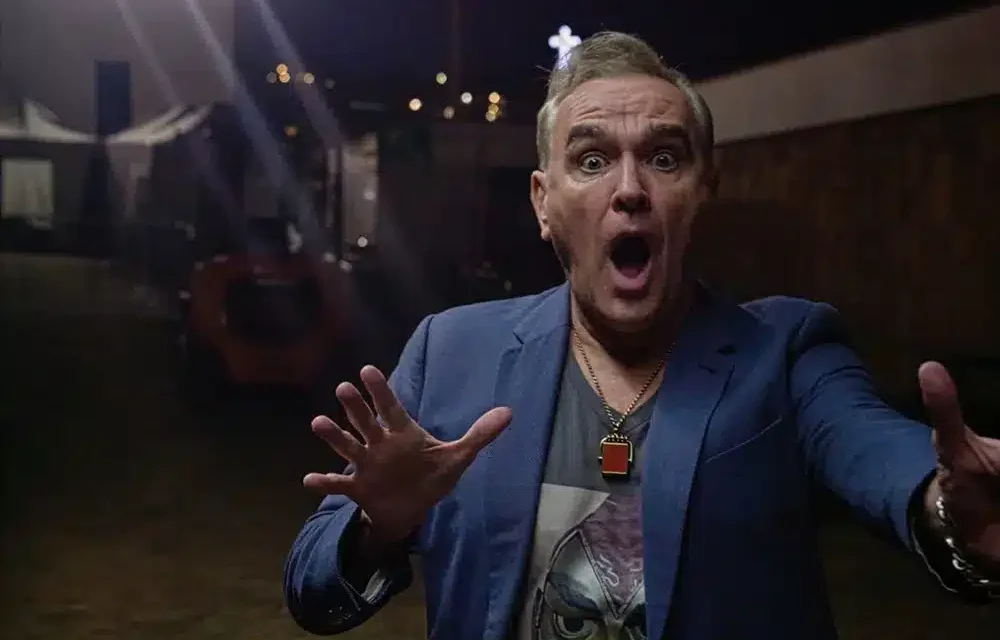
As we look at the quilt of Make-Up Is a Lie, Morrissey’s unsettling demeanor extends past his hanging expression. Is that smoky curl beneath his eye…make-up? The meticulously formed eyebrows and glossy look counsel additional layers of that means. Whereas some speculate it is AI manipulation, it’d signify Morrissey assuming a brand new Wildean persona, permitting him to convey his truths whereas concurrently including a layer of irony to the notion of artifice.
Contemplating these frameworks, Make-Up Is a Lie emerges as a posh and impressed piece of artwork pop. Shifting previous preliminary trepidation over thematic dissonance, it now appears a cohesive synthesis of Morrissey’s poetic origins paired with modern themes from a later life stage. If the make-up is authentically Morrissey’s, maybe it horrifies him, suggesting that the follies of his persona are the topic of this album.
Make-Up Is a Lie Is Morrissey’s Fact
Make-Up Is a Lie radiates a temper of contemplation and vulnerability. Morrissey has chosen to open up, prepared to be extra emotionally uncovered than he has been since his time with the Smiths. In comparison with the sharp critiques of others all through his profession, this album feels redemptive.
The opening observe, “You’re Proper, It’s Time,” initially seems liberating, as he sings of wanting to flee the confines of contemporary life and inspiring love. But, the sentiment turns darkish with the conclusion that he “casts no shadows or reflections.” Is the narrator useless or a monster? This tune explores themes of self-loss and distortion, culminating in cautious hope.
These near Morrissey have usually reported a need to like him, but he has struggled to simply accept it. The tune seems to concede that it’s time to embrace vulnerability and permit love in. It stands out as an sudden gem in his catalog.
After this opening, “Make-Up Is a Lie” might be appreciated anew, revealing Morrissey’s shedding of artifice and unveiling his truths.
With “Notre-Dame,” Morrissey broadens his focus to societal points, critiquing how even highly effective establishments put on masks. Singing dispassionately to a darkwave beat, he declares, “Notre-Dame, we all know who / Tried to kill you,” successfully commenting on societal indifference whereas he stays steadfast in expressing himself. Accusations of xenophobia levied towards the tune could merely underscore his intention as a provocateur.
Voicing controversy has lengthy shaped a part of Morrissey’s identification as an artist. Within the preface to The Image of Dorian Grey (1890), Oscar Wilde displays, “There isn’t any such factor as an ethical or an immoral e book. Books are properly written or badly written. That’s all.” This sentiment could equally apply to music, suggesting that Morrissey’s controversial expressions are an invite to contemplate how persona shapes political identification.
“Amazona” launches a multi-track exploration of Morrissey’s teenage musical awakenings. This assortment reveals a shimmering homage dripping with Seventies nostalgia. The songs have to be appreciated collectively to understand their full significance.
“Lester Bangs” pays tribute to the rock critic who impressed Morrissey’s personal musical journey. The tune’s mournful tone speaks of sensitivity and brilliance, evoking empathy and connection.
In “The Evening Pop Dropped,” recollects an period he equates with Oscar Wilde, intertwining his admiration for Wilde’s ethos about being oneself with references to celebrated glam-rock musician Marc Bolan.
Morrissey’s Monsters
Morrissey’s first live performance at age 13 was T. Rex in Manchester. “The Evening Pop Dropped” resonates with Bolan’s personal sound, serving as a touching tribute to his tragically temporary life. Its vibrant power contrasts with the grave subject material, providing a haunting reflection on a second that outlined younger Morrissey’s path to fame.
Morrissey skillfully demonstrates that pop music is a severe artwork type. Its profound results, particularly throughout the tumult of adolescence, are palpable. “Amazona,” a canopy of Roxy Music’s tune, seems as a misty ode to hopeful paradises past our personal.
In “Headache,” Morrissey emerges with intense vulnerability, tackling themes of heartbreak whereas conjuring a soundscape that captures the ambivalence of his ache. The stress culminates as he exclaims “Basta!” echoing a need to reclaim company.
“Boulevard” embodies self-loathing and give up, depicting a descent into despair and indulgence. The lyrics convey a masochistic tendency, the place ache turns into a type of solace.
The road “Individuals cross in Lamborghini automobiles, however we’ve the celebs” evokes Wilde’s well-known quote about gazing on the stars from the gutter, highlighting the distinction between wealth and authenticity.
Certainly, “Boulevard” showcases lyrical sophistication harking back to the Smiths—a witty infusion of literary references with common truths that feels intrinsically Morrissey.
“Zoom Zoom the Little Boy” takes on a brighter temper, evoking the swinging spirit of the ’60s. Regardless of being dismissed by some as trivial, its earnestness speaks volumes about youthful hope and a deep sense of justice.
The lament “Kerching, Kerching” portrays materialism as a misleading lover, additional reflecting upon previous relationships and misplaced connections inside the risky atmosphere of fame.
“Many Icebergs In the past” unveils Morrissey’s introspection by way of themes of self-harm, entwined with layers about historic serial crime. Its intricate lyrics trace at relationships, revealing emotional burdens that echo traditional Morrissey.
The closing observe, “The Monsters of Pig Alley,” encapsulates the album’s poignant transformation. Reflecting on fame’s grotesqueness, it navigates the wonderful line between private and familial monstrosity. Contextually, it feedback on the impression of movie star and private loss, suggesting a craving for connection amid chaos.
This layered that means extends additional, alluding to Italian filmmaker Pier Paolo Pasolini, whose demise resonates with Morrissey’s personal battles towards public perceptions and political controversy.
The Duality of Self within the Quagmire of Movie star
Make-Up Is a Lie weaves a wealthy tapestry reflecting the duality of self amidst the trials of movie star. As soon as fame is tasted, who willingly walks away? But, what does one sacrifice in remaining tethered to that lover?
Morrissey now stands at a reflective distance, considering the outcomes confronted by his heroes, warning of despair and loss. His provocative declare in “Boulevard” about needing “another reason to surrender on God” hints at a non secular disaster, maybe indicated by a picture of a receding cross within the cowl artwork.
The primary launch post-Smiths, Viva Hate, marked a metamorphosis in Morrissey’s persona, shifting from vulnerability to a indifferent idol. But, with Make-Up Is a Lie, he could also be presenting a return to vulnerability, suggesting a newfound necessity for transparency in a world that always calls for masks.
All through his profession, Morrissey has danced between personas, wrestling with identification and inventive expression. His newest work suggests an evolution, as he embraces vulnerability whereas inviting us to have interaction with the complexities of life and artwork.
Works Cited
“This Charming Man”. Information Run. ITV. 7 April 1984.
“Clarify the Enchantment of Pleasure Division”. Eight Days a Week. BBC. 25 Could 1984.
The Rise and Fall of the Smiths. BBC, 1999.